


— THE REALITY
Most Crop Problems Are Treated Too Late — and Too Shallowly.
Symptoms above ground often originate below ground. PRESICA identifies the limiting constraint before treatment is selected.
COMMON UNDERLYING CONSTRAINTS


01
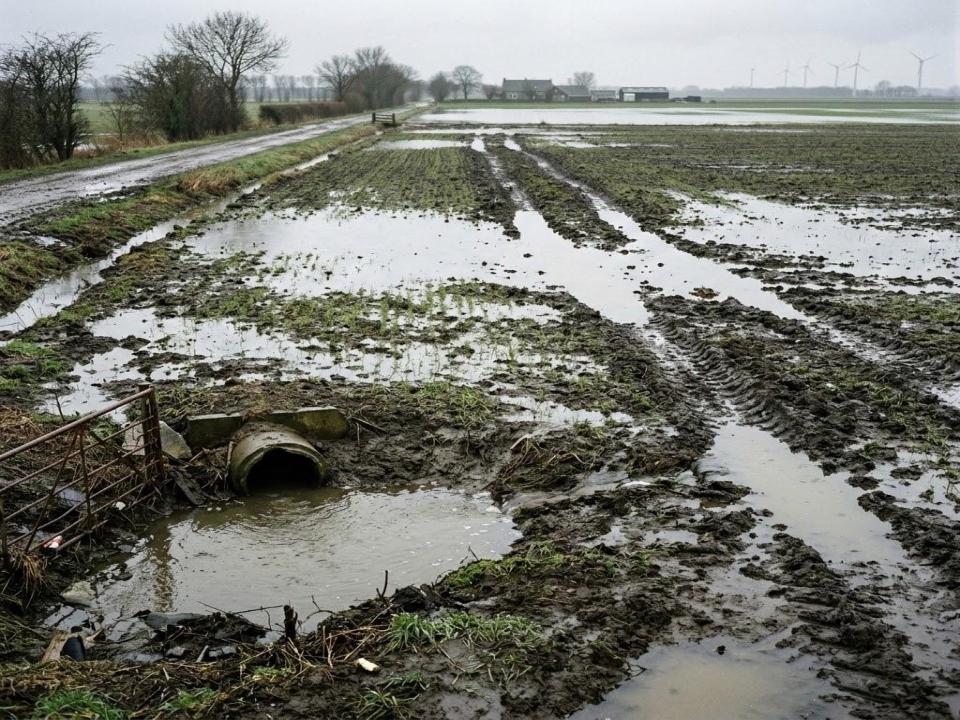
Poor Soil Structure
Crusted or compacted soil restricts infiltration, root growth and fertiliser response.

02
Nutrient Imbalance
Nutrient imbalance can limit uptake and crop response, even where fertiliser inputs are adequate.
03
Root-Zone Stress
Restricted rooting and poor soil conditions reduce nutrient uptake, crop resilience and field performance.
04
Water Management Constraints
Poor drainage or infiltration restricts root aeration and water availability, reducing crop response.
DIAGNOSTIC PRIORITIES
What PRESICA Helps Diagnose
When crop performance does not match management effort, PRESICA helps identify the limiting constraint before the treatment is changed.
Poor Crop Response
Despite adequate fertiliser inputs.
Waterlogging & Poor Infiltration
Persistent excess water, slow drainage or restricted infiltration.
Low Nutrient-Use Efficiency
Applied nutrients are not translating into the expected crop response.
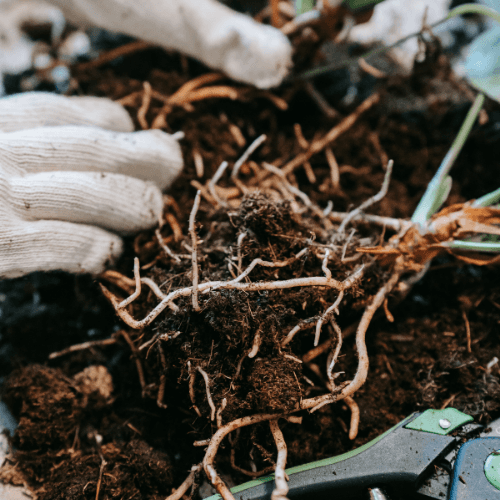
Weak or Restricted Root Systems
Rooting depth, compaction or root-zone conditions may be limiting uptake.
Soil Acidity & Nutrient Imbalance
Chemical conditions may be restricting nutrient availability or crop performance.
Uncertain Soil-Health Improvement
Verify whether management interventions are producing measurable improvement.
WHAT YOU RECEIVE
From Evidence to Action
PRESICA converts field observations, root-zone evidence and laboratory results into a prioritised diagnostic record for management decisions.
Evidence is collected once. Interpretation should support multiple management decisions.
01
Field Diagnostic Assessment
Structured assessment of site conditions, crop symptoms, management context and root-zone constraints.
02
Laboratory Interpretation
Soil results interpreted in agronomic context rather than presented as isolated laboratory values.
03
Constraint Prioritisation
Identification and ranking of the factors most likely to be limiting crop performance.
04
Management Action Plan
Prioritised corrective actions with technical rationale and practical implementation guidance.
05
Baseline & Monitoring Record
A documented baseline that allows subsequent changes and intervention response to be tracked.
06
Executive Diagnostic Report
A concise decision-ready report for farm management, technical teams and relevant stakeholders.
DIAGNOSIS-FIRST APPROACH
We Diagnose First.
Then We Recommend.
A structured process connects the field assessment to management priorities and a measured response.
Diagnosis replaces assumptions with priorities—so action addresses the real constraint.
WHY PRESICA
The PRESICA Difference
PRESICA combines field diagnosis, laboratory interpretation and root-zone evidence to support management decisions before corrective action is selected.
Evidence before intervention.
01
Independent Diagnosis Before Intervention
Recommendations follow diagnosis — not the other way around.
02
Root-Zone Evidence Before Recommendation
Crop symptoms are interpreted together with rooting condition, soil structure and field observations.
03
Integrated SHE™ Intelligence
Structure, Biology and Chemistry are assessed together rather than interpreted as separate datasets.
04
Designed for Tropical Soils and Cropping Systems
Interpretation considers tropical soils, rainfall and drainage, rooting conditions, crop systems and management history.
05
Decision-Ready Advisory
Findings are translated into prioritised management actions, not generic agronomy notes.
One integrated diagnosis across Structure, Biology and Chemistry.
BIOLOGY
CHEMISTRY
STRUCTURE
STRUCTURE
Assesses whether the soil physical environment allows adequate water movement, aeration and root development.
Aggregation · compaction · porosity · infiltration · water movement
BIOLOGY
Assesses biological activity and function in relation to nutrient cycling and soil processes.
Microbial activity · nutrient cycling · soil-life processes · root–microbe interactions
CHEMISTRY
Assesses the chemical conditions influencing nutrient availability, exchange processes and crop response.
pH · EC · nutrient balance · exchange capacity · acidity · salinity · toxicity risk
WHO WE WORK WITH
Built for Decisions Across Tropical Agriculture
PRESICA supports farms, estates, agribusinesses, research teams and agricultural programmes that need clearer evidence before making soil, root-zone or intervention decisions.
01 / OPERATIONAL DIAGNOSIS
Estates & Plantations
Support diagnosis of soil, root-zone and crop-performance constraints across commercial production systems.
02 / FIELD PRIORITIES
Commercial Farms
Translate field observations and soil evidence into practical management priorities.
03 / TECHNICAL VALIDATION
Agribusiness & Input Companies
Support technical validation of products, amendments and agronomic interventions under field conditions.
04 / BASELINES & MONITORING
Regenerative Agriculture Programmes
Establish baselines, identify constraints and track measurable change over time.
05 / SOIL-HEALTH EVIDENCE
Sustainability Teams
Provide evidence to support soil-health, regenerative and land-management programmes.
06 / RESEARCH DESIGN
Research & Innovation Partners
Support field protocols, validation design, technical interpretation and evidence generation.
07 / PROGRAMME ASSESSMENT
Government & Institutional Programmes
Support structured assessment, field evidence and technical decision-making across agricultural initiatives.
APPLICATIONS
PRESICA’s diagnostic approach can be adapted to different crops, sites and management systems where soil and root-zone constraints affect crop performance.

Oil Palm
Diagnosis of soil physical, chemical, biological and root-zone constraints across plantation systems.

Paddy
Assessment of soil condition, water management, nutrient dynamics and field variability in irrigated systems.

Durian
Diagnosis of drainage, rooting environment, acidity, nutrient imbalance and orchard soil constraints.
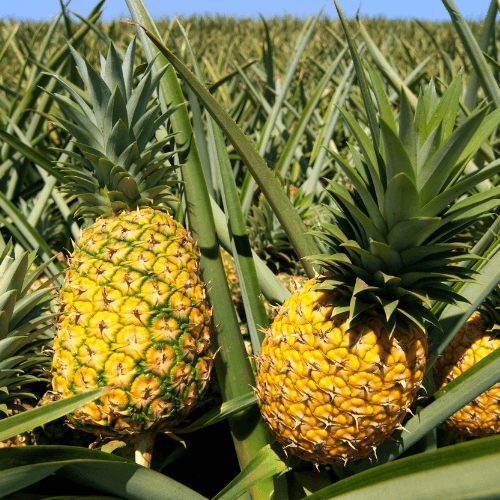
Pineapple
Assessment of soil condition, nutrient-use efficiency, drainage and root-zone limitations.

Regenerative Agriculture Pilots
Baseline diagnosis, intervention monitoring and verification of measurable soil-health change.

Other Tropical Cropping Systems
Adapted diagnostic assessment based on crop, soil type, climate, management history and production objective.
View Projects
EVIDENCE IN PRACTICE
FIELD DIAGNOSTIC
Soil condition
Crop symptoms
Root zone
LAB INTERPRETATION
Field observations
Laboratory evidence
Agronomic context
SOIL HEALTH
Baseline
Indicators
Follow-up
REGENERATIVE AGRICULTURE
Baseline
Monitoring
Measured response
VALIDATION
Field evaluation
Response
Technical interpretation
TROPICAL SYSTEMS
Crop
Soil
Climate
Management
INSIGHTS
Technical Thinking for Better Soil Decisions
Evidence-led perspectives on soil health, root-zone diagnosis, tropical agronomy and the interpretation of field and laboratory data.

SHE™ INTELLIGENCE
The Three Layers of Soil Health: Structure, Chemistry and Biology
Soil health is not one number. PRESICA interprets physical structure, chemical balance, and biological function together to understand crop performance and field constraints.
Read Insight →

ROOT-ZONE ADVISORY
When Crop Problems Are Actually Root-Zone Problems
Weak growth, stress, and inconsistent performance often begin below ground. Root-zone diagnosis helps identify drainage, compaction, acidity, and functional soil constraints.
Read Insight →

REGENERATIVE AGRICULTURE & ESG
Why Regenerative Agriculture Needs Soil Evidence, Not Just Practices
Regenerative agriculture cannot be verified by practice lists alone. It needs soil baselines, monitoring indicators, field evidence, and measurable improvement logic.
Read Insight →

TECHNICAL LEADERSHIP
Scientific Leadership. Field-Based Expertise.
Dr Suzie Haryanti Husain
Soil Health Expert | Agronomy Advisor | Researcher | Trainer
PRESICA’s technical work is led by Dr Suzie Haryanti Husain, integrating soil science, agronomy, field diagnostics and applied research across tropical agricultural systems.
Meet Our Technical Lead
→
Field-based diagnosis
Evidence-led recommendations
Practical farm decisions